Local roots
Proudly based in Nagoya, working with families and schools across Nagoya and Gifu.


Built in Nagoya. Made for the world.
Hear See Do has spent more than a decade helping children, schools, and adults turn English knowledge into confident communication.
Find out more →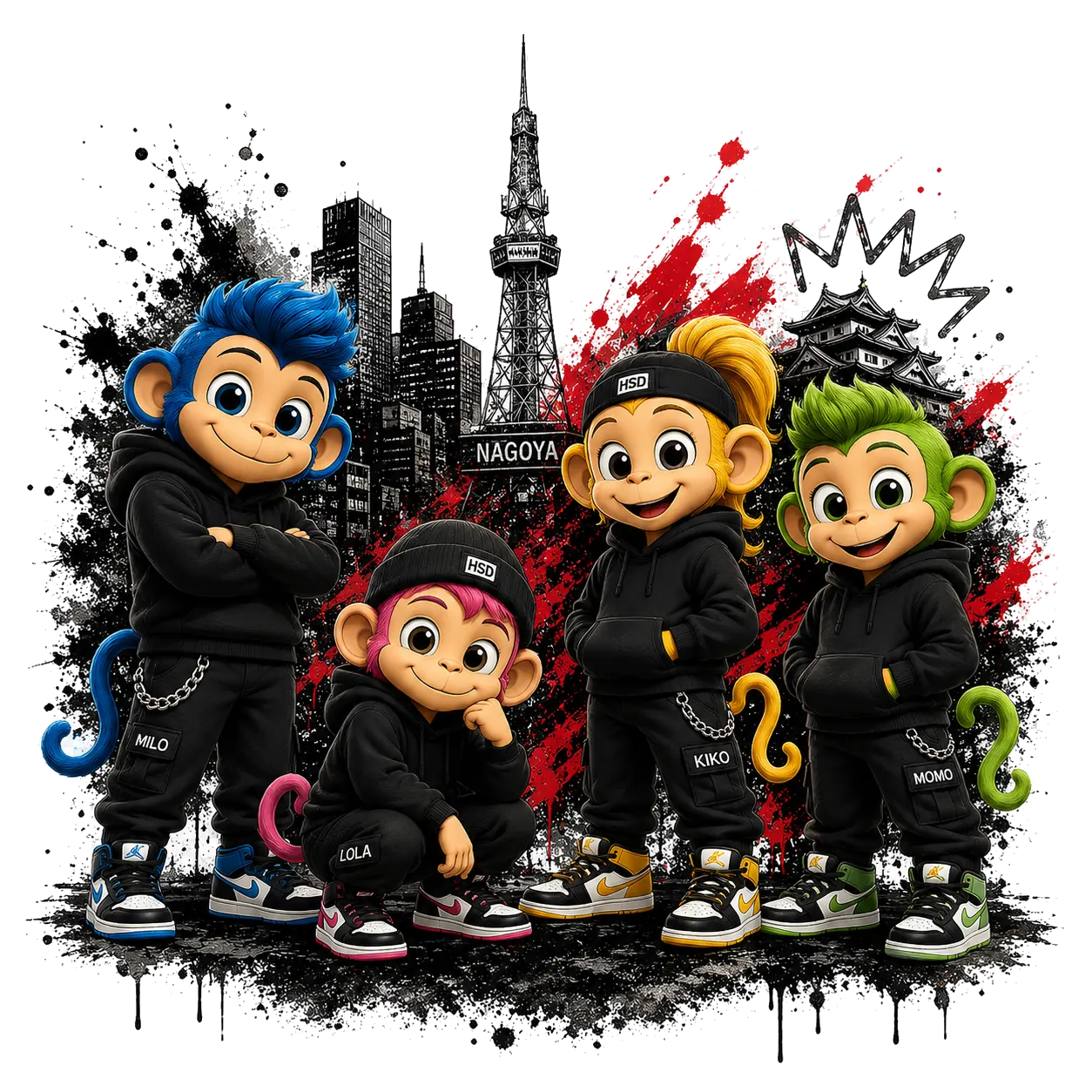
Confidence before correctness
Proudly based in Nagoya, working with families and schools across Nagoya and Gifu.
Supporting communication, creativity, self-expression, and the courage to try.
Connect sound, natural rhythm, and meaning through music, conversation, and listening.
Make language visible and memorable with movement cues, characters, and clear examples.
Move, speak, create, and communicate. Practice turns understanding into confidence.
Learners grow when they feel safe enough to try, make mistakes, and discover their voice.
Meet the founder
I’m a Canadian educator, author, performer, and the founder of Hear See Do.
My path into education began with two things that continue to shape everything I do: a love of performance and a belief in the potential of children. I completed a three-year performing arts program at Randolph Academy for the Performing Arts in Toronto and later graduated from Loyalist College with a diploma in Early Childhood Education.
Those experiences taught me that learning is about much more than receiving information. Performance taught me how movement, emotion, storytelling, rhythm, and human connection can bring an idea to life. Early childhood education taught me how important safety, curiosity, play, and encouragement are to a learner’s development.
I have worked with children and families since I was 20, including an experience working with children in Bolivia. After coming to Japan, I spent seven years teaching at an international kindergarten and served as Head Teacher for my final two years. Since then, I have taught children, teenagers, adults, families, schools, and community groups across Japan.
Over the years, I began to notice something important: the greatest barrier to communication was not always vocabulary or grammar. Very often, it was confidence.
Learners may know the answer but hesitate to speak. They may understand the English but be afraid of making a mistake. They may have knowledge without yet believing that their voice deserves to be heard.
That realization led me to establish Hear See Do in 2015. I wanted to create a different kind of learning experience—one where people could move, play, speak, create, make mistakes, and discover what they were capable of doing. Since then, Hear See Do has worked with thousands of learners across Nagoya and Gifu through kindergarten programs, after-school classes, private lessons, adult experiences, original books, and educational partnerships.
The Hear See Do method reflects how I believe meaningful learning happens. We hear something, see it represented, and then learn by doing it ourselves. Through repeated, supported experiences, understanding becomes ability and ability becomes confidence.
This is the foundation of my belief in ‘confidence before correctness.’ It does not mean that correctness is unimportant. It means that learners need to feel safe enough to try before they can grow. Confidence opens the door to communication, curiosity, creativity, resilience, and a lifelong love of learning.
Today, my hopes for Hear See Do extend beyond teaching English. I want it to help learners of every age develop the human abilities they will need in a rapidly changing world: confidence, communication, curiosity, creativity, empathy, courage, and connection.
As artificial intelligence becomes more capable, I believe human connection will become more valuable—not less. Technology can provide information, personalization, practice, and support, but it should never replace the teachers, families, friendships, experiences, and relationships that help people discover who they are.
Through Hear See Do and HSDOS.AI, my goal is to bring these two worlds together: thoughtful technology and meaningful human learning. I want to create a connected place where children, families, adults, and educators can continue learning while still feeling seen, encouraged, and understood.
Hear See Do began in Japan, but the hope behind it is much bigger: to build a future of learning where people are not only prepared to give the correct answer—they are confident enough to use their voice, share their ideas, connect with others, and take their place in the world.
Keep the confidence growing